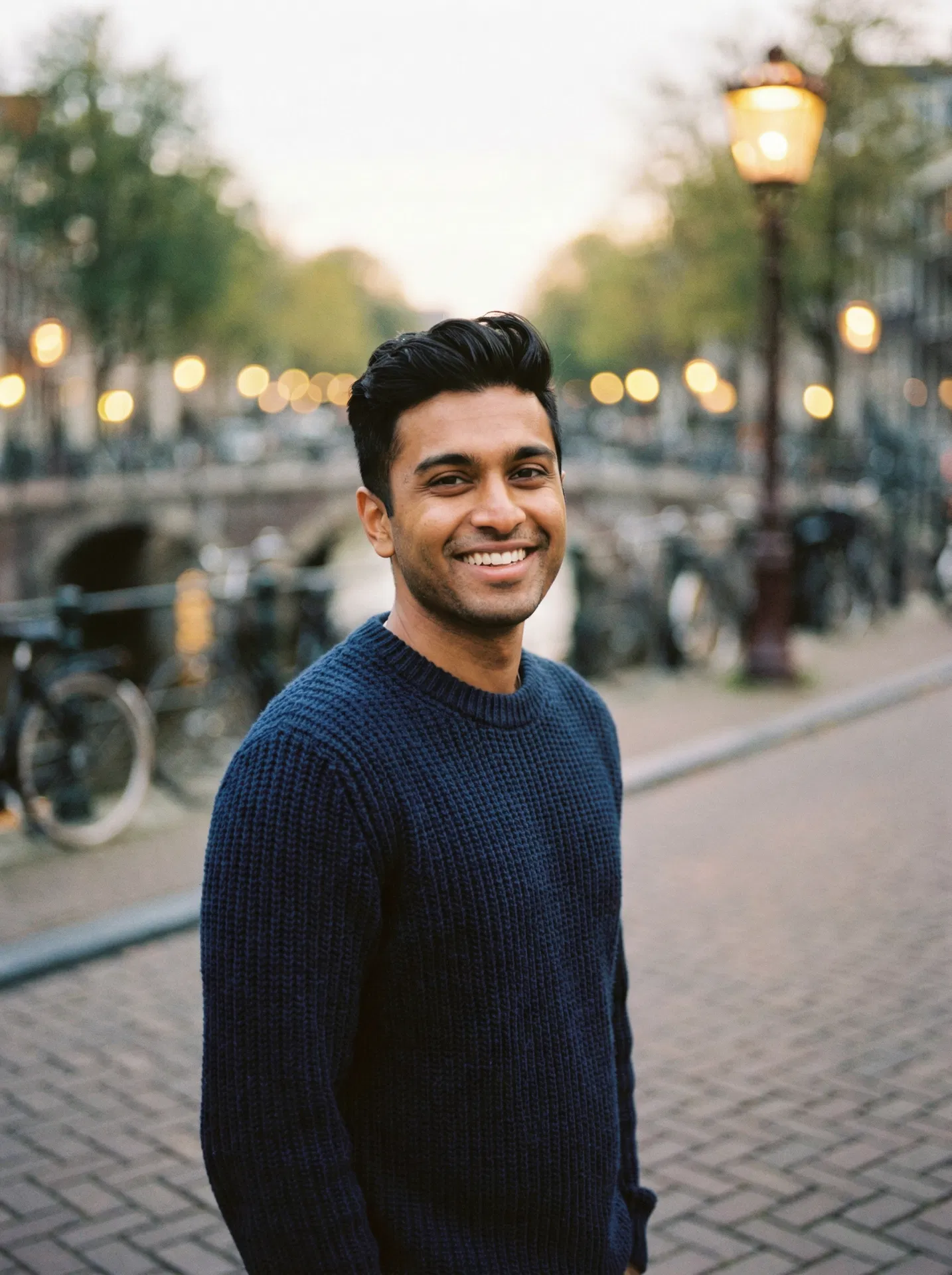
"Rohan dives (literally) into the city. He explores his own roots, and those of subcultures that shaped Amsterdam."
Rohan Mehta grew up between Mumbai and Amsterdam, and has spent his career studying the North Sea. He's fascinated by the connections between the natural world and human culture — how cities are shaped by water, how trade routes follow ocean currents, how the history of science is inseparable from the history of exploration. His Museum Night route follows these threads from the natural history collections of ARTIS to the global trade histories of the Tropenmuseum.
Water, Trade & Wonder
A route that follows Amsterdam's relationship with the sea — from the natural history of ARTIS to the global trade networks of the Golden Age. Rohan's picks are curious, wide-ranging, and always grounded in science.
The Route
The whale skeleton at night is one of the most beautiful things in Amsterdam. The bioluminescence demonstration is genuinely mind-blowing.
View museumNEMO's hands-on science exhibits are usually aimed at kids, but the adult evening programme is excellent. The roof terrace has the best view in the city.
View museumThe archaeological collections here include objects from ancient maritime cultures — Phoenician trade goods, Greek amphorae, Egyptian river boats.
View museumThe VOC records here are extraordinary — maps, ship logs, trade accounts. The story of how Amsterdam became a global city is all here.
View museumThe Tropenmuseum's collections come from the same trade networks documented in the City Archives. The evening programme addresses this history directly.
View museumThe spice trade section of the Amsterdam DNA exhibition is the best I've seen. The smell installation is a stroke of genius.
View museumThe history of coffee, tea, and cocoa — all products of the same global trade networks. A small museum with a surprisingly rich story.
View museumEnd with Tulip Mania — the world's first speculative bubble. The story of how a flower nearly broke the Dutch economy is perfect late-night material.
View museum